
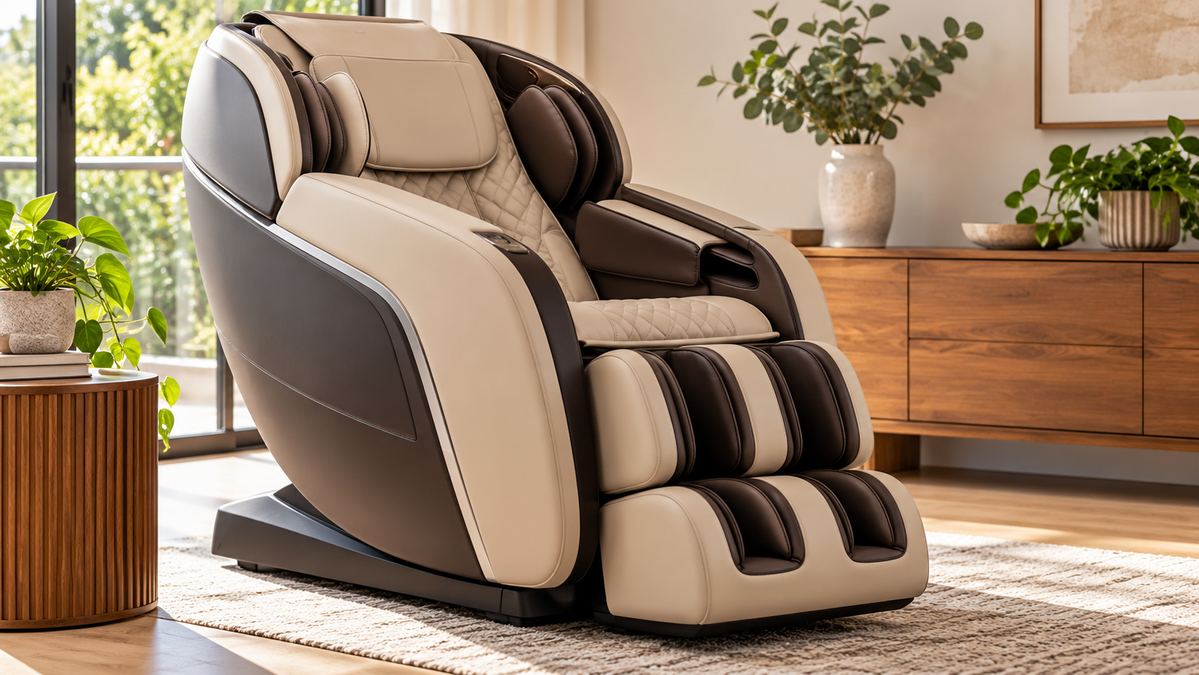
Massage Chair Features: What to Look For
Massage chairs can include a wide range of features, and it can be difficult to know which ones are genuinely useful when you’re comparing different models. Features such as roller systems, airbags, heat, zero gravity, reclining positions and massage programs can all affect how a chair works and how comfortable it is to use.
This guide explains the main massage chair features and what to look for when comparing them. Rather than focusing on how many features a chair has, the aim is to help you understand what each feature does and whether it is likely to suit the way you plan to use the chair.
Massage Chair Roller Systems
The roller system is one of the most important features to understand when comparing massage chairs. Rollers are the components that move along the chair’s track to provide many of the massage movements across the back and other areas.
Massage chairs can use different roller technologies, commonly described as 2D, 3D or 4D. These terms generally refer to how the rollers move and, depending on the system, how much control you have over massage depth and movement.
A 2D system generally follows a fixed path, while 3D systems can add movement toward and away from the body. 4D systems are designed to add greater variation in roller speed and rhythm.
These terms are not completely standardised between manufacturers, so don’t choose a chair based solely on whether it is labelled 3D or 4D. Check the actual roller specifications, adjustment options and massage programs provided.
What to Look For in a Roller System
- Roller type: Check whether the chair uses 2D, 3D or 4D technology.
- Roller adjustment: Look for controls that allow you to adjust massage depth or intensity where available.
- Track design: Check how far the rollers travel and which areas they are designed to cover. Massage movements: Look at the types of movements and programs available.
- Body fit: Make sure the roller track and adjustments are suitable for your height and body shape.
Airbag Massage
Airbags are another common feature in massage chairs. They inflate and deflate to provide compression around different parts of the body. Depending on the chair, airbags may be positioned around the shoulders, arms, hips, calves and feet.
Airbag massage can provide a different sensation from roller massage. Some chairs allow the air pressure or intensity to be adjusted, while others provide preset levels through their massage programs.
The number of airbags is not necessarily the most important factor. Their location, coverage and available controls can be more useful when comparing different chairs.
What to Look For in Airbag Massage
- Airbag coverage: Check which areas of the body are covered.
- Adjustable intensity: Look for different air pressure levels if this is important to you.
- Airbag placement: Compare the location of airbags rather than simply counting them.
- Independent controls: Check whether air massage can be adjusted separately from other massage functions.
- Foot and calf compression: If leg massage matters to you, check whether these areas are included.
Heat Massage
Heat is a popular feature in massage chairs and is usually combined with the chair’s other massage functions. Depending on the model, heat may be provided across the back, lumbar area, seat or other parts of the chair.
Heat can change the overall feel of a massage session, but it should be considered as an additional feature rather than a measure of the chair’s overall quality. Two chairs may both offer heat while having very different roller systems, massage coverage and adjustment options.
If heat is important to you, check exactly which areas are heated and whether the heat can be adjusted or switched off independently.
What to Look For in Heat Features
- Heated areas: Check whether heat is provided to the back, lumbar area, seat or other areas.
- Heat controls: Look for adjustable settings where available.
- Independent operation: Check whether you can turn the heat on or off separately from the massage.
- Massage compatibility: Find out whether heat can be used with the massage programs you prefer.
- Controls: Check how easily the heat function can be activated and adjusted.
Zero Gravity Position
Zero gravity is a reclining position rather than a type of massage technology. In a zero gravity position, the chair reclines the back while raising the legs, changing the angle of the body in the chair.
Some people may find this position comfortable during a massage because it can change how the body is supported. However, the exact reclining angle and movement can vary between chairs.
When comparing chairs, don’t assume that every model described as zero gravity provides the same position or adjustment options.
What to Look For in Zero Gravity
- Reclining positions: Check how many reclining positions are available.
- Leg elevation: Look at how the leg section moves when reclining.
- Wall clearance: Check how much space the chair requires behind it.
- Ease of access: Consider how easy it is to get into and out of the chair.
- Remote controls: Check how the reclining position is adjusted.
Reclining Positions
Reclining is an important feature to consider because massage chairs can require different amounts of space depending on how they move. Some chairs recline significantly, while others are designed to operate closer to a wall.
A chair may have several reclining positions, allowing you to choose the angle that feels most comfortable. The available positions and the way the chair moves can vary between models.
Before buying, measure the space where the chair will be used and check the manufacturer’s recommended clearance. Also consider the chair’s dimensions when fully reclined rather than looking only at its upright size.
What to Look For in Reclining Features
- Reclining range: Check the available positions and angles.
- Wall clearance: Find out how much space is required behind the chair.
- Chair dimensions: Measure the available floor space carefully.
- Access: Make sure you can comfortably enter and leave the chair.
- Remote control: Check how easily the reclining function can be adjusted.
Massage Programs and Modes
Massage chairs can offer a range of preset programs and massage modes designed for different preferences or areas of the body. The number of programs can vary considerably between models.
Common options may include programs focused on the back, shoulders, relaxation, stretching, recovery or specific massage techniques. Some chairs also allow you to create a customised session by adjusting the massage area, intensity, speed or other settings.
A larger number of programs does not necessarily mean a chair will provide a better massage. Consider whether the available programs are relevant to the way you expect to use the chair.
What to Look For in Massage Programs
- Preset programs: Check which programs are included.
- Customisation: Look for controls that allow you to adjust the massage to your preference.
- Intensity levels: Check whether massage intensity can be changed.
- Target areas: Find out whether you can select specific areas of the body.
- Manual controls: Check whether you can control individual massage functions yourself.
Body Fit and Size Adjustments
A massage chair can have excellent features but still be uncomfortable if it does not fit your body correctly. Body fit is therefore one of the most important things to consider before buying.
Manufacturers may provide recommended height and weight ranges, but these can vary between models. The position of the rollers, shoulder areas, arm compartments, calf sections and foot wells can all affect how well the chair fits.
If possible, check the manufacturer’s measurements and recommendations before purchasing. This is particularly important when buying online, because returning a large massage chair can be difficult and expensive.
What to Look For in Body Fit
- Recommended height: Check the manufacturer’s suggested height range.
- Weight capacity: Make sure the chair is suitable for your body weight.
- Shoulder position: Check whether the shoulder areas can accommodate your body.
- Foot and calf fit: Make sure the foot wells and calf compartments are suitable for your size.
- Arm compartments: Check the size and positioning of the arm areas.
- Adjustability: Look for settings that allow the chair to accommodate different body sizes.
Massage Track Length and Coverage
The massage track determines how far the rollers can travel along the body. Track design can affect which areas of the back and body receive roller massage.
Some chairs use shorter tracks that concentrate on the back, while others use longer tracks designed to provide greater coverage. A longer track does not automatically mean a better massage, because body fit and the positioning of the rollers are also important.
When comparing chairs, look at the actual track length and the areas it is designed to cover rather than relying only on descriptions such as “full-body.”
What to Look For in Massage Track Coverage
- Track length: Check how far the rollers travel.
- Upper-body coverage: Find out whether the track reaches the shoulders and upper back.
- Lower-back coverage: Check how far the rollers travel toward the lower back.
- Glute and hip coverage: Some models extend massage further down the body.
- Body fit: Make sure the track design is suitable for your height.
Foot and Calf Massage
Foot and calf massage is included in many full-size massage chairs, but the design and coverage can vary considerably. Some chairs use airbags for compression, while others also include rollers or other mechanisms for the feet.
The fit of the foot and calf compartments is particularly important. A chair may offer foot and calf massage but still be unsuitable if the compartments are too small or do not accommodate your leg length.
If foot massage is one of your priorities, check the manufacturer’s recommended foot size and height range before buying.
What to Look For in Foot and Calf Massage
- Foot size: Check the maximum recommended foot size.
- Calf fit: Make sure the calf compartments are suitable for your leg size.
- Airbags: Check whether compression is provided around the feet and calves.
- Foot rollers: Find out whether the chair includes rollers or other foot-massage mechanisms.
- Adjustability: Check whether foot and calf settings can be adjusted.
Massage Intensity and Speed Controls
The ability to adjust massage intensity and speed can make a significant difference to how a massage chair feels. Different people may prefer different levels of pressure, and your preference may also change from one massage session to another.
Some chairs provide several intensity levels, while others allow more detailed adjustments to the roller depth, speed or air pressure. The available controls depend on the chair and its massage system.
When comparing chairs, look beyond the number of preset programs and check how much control you have over the intensity and speed of the massage.
What to Look For in Intensity Controls
- Intensity levels: Check how many adjustment levels are available.
- Roller depth: Look for depth adjustment if you want more control over roller pressure.
- Roller speed: Check whether the speed can be changed.
- Air intensity: Find out whether airbag pressure can be adjusted.
- Separate controls: Check whether different massage functions can be adjusted independently.
S-Track and L-Track Designs
Massage chairs can use different track designs, with S-track and L-track being two common terms you may see when comparing models.
An S-track follows the natural curve of the spine, allowing the rollers to travel along the back while following its general shape.
An L-track extends further down from the back toward the seat area. This can allow the rollers to reach areas that an S-track may not cover.
The track design is only one part of the overall massage system. A longer track does not automatically mean a better chair, so consider the track design together with body fit, roller movement and massage coverage.
What to Look For in Track Design
- Track shape: Check whether the chair uses an S-track, L-track or another design.
- Coverage: Find out which areas the rollers actually reach.
- Body fit: Make sure the track is suitable for your height and body shape.
- Roller movement: Consider the roller technology used with the track.
- Seat coverage: If an L-track is important to you, check how far the track extends into the seat area.
Neck and Shoulder Massage
Neck and shoulder massage can be an important feature if these are areas you particularly want to target. Depending on the chair, this may be provided by rollers, airbags or a combination of massage functions.
The positioning of the massage components can vary between models, so body fit is important. A chair that works well for one person’s height may position the massage differently for another person.
When comparing chairs, check how the manufacturer describes neck and shoulder coverage and whether the intensity or position can be adjusted.
What to Look For in Neck and Shoulder Massage
- Coverage: Check which parts of the neck and shoulders are targeted.
- Roller position: Find out how the rollers reach the upper back and shoulder area.
- Airbags: Check whether shoulder airbags are included.
- Adjustability: Look for controls that allow the massage position or intensity to be adjusted.
- Body fit: Make sure the chair is suitable for your height.
Hand and Arm Massage
Some massage chairs include dedicated areas for the arms and hands. These areas may use airbags to provide compression, while some models include additional massage functions for the hands or forearms.
Arm and hand massage can be useful if this is an area you specifically want to target, but the design varies between chairs. Check the size and positioning of the compartments to make sure they are suitable for you.
As with other massage chair features, don’t assume that a chair provides the same level of arm or hand massage simply because it lists the feature. Check the actual specifications and coverage.
What to Look For in Hand and Arm Massage
- Arm coverage: Check which parts of the arms are included.
- Hand coverage: Find out whether the hands are included.
- Airbag placement: Check where compression is provided.
- Compartment size: Make sure the arm and hand areas are suitable for your body.
- Intensity controls: Check whether the compression can be adjusted.
Stretching and Body Movement
Some massage chairs include programs designed to move or stretch parts of the body as part of the massage experience. These programs can use the chair’s reclining mechanism, rollers, airbags or a combination of features.
Stretching functions can vary significantly between models. The movement may be gentle on some chairs and more pronounced on others, so check the manufacturer’s description and instructions before choosing a chair based on this feature.
If stretching is important to you, look at exactly what the program does and whether the movement can be adjusted or stopped.
What to Look For in Stretching Features
- Stretch programs: Check which stretching or movement programs are included.
- Movement: Find out which parts of the body are involved.
- Adjustability: Check whether intensity or movement can be adjusted.
- Control: Make sure you can stop or change the program easily.
- Body fit: Check that the chair is suitable for your height and body size.
Music, Bluetooth and Audio
Some massage chairs include built-in speakers or Bluetooth connectivity, allowing you to listen to music or other audio during a massage session. These features are generally designed to add to the overall relaxation experience rather than provide the massage itself.
Audio features can vary between models. Some chairs may include Bluetooth speakers, while others may provide different connection options or controls.
If audio is important to you, check exactly how the connection works and whether the controls are easy to use. You should also consider whether you are likely to use the feature before paying extra for it.
What to Look For in Audio Features
- Bluetooth: Check whether Bluetooth connectivity is included.
- Speakers: Find out where the speakers are positioned.
- Controls: Check how easily volume and audio functions can be adjusted.
- Compatibility: Make sure the chair works with your preferred devices.
- Independent use: Check whether audio can be used without activating a massage program.
Remote Controls and Smart Features
The way you control a massage chair can make a significant difference to how easy it is to use. Most chairs include a remote control, while some models may also provide touchscreen controls, smartphone apps or other control options.
More advanced controls can provide additional customisation, but they can also make a chair more complicated to operate. Consider whether you prefer simple controls or want detailed adjustment options.
If a chair uses an app or smart features, check whether the app is compatible with your phone and whether the main massage functions can still be controlled without it.
What to Look For in Controls
- Remote control: Check whether the main functions are easy to access.
- Display: Look at how clearly the settings and programs are shown.
- App control: Check whether smartphone control is included and compatible with your device.
- Customisation: Find out how many settings can be adjusted.
- Ease of use: Consider whether the controls are straightforward enough for regular use.
Space, Installation and Clearance
Massage chairs are large pieces of equipment, so the space required to install and use one should be considered before buying. The chair needs enough room not only for its upright position but also for reclining and for you to get in and out comfortably.
Some models are designed to recline closer to a wall, while others require more clearance behind them. The chair’s weight and size can also affect delivery, assembly and placement.
Measure the available space carefully before ordering. Check doorways, hallways and other access points as well as the final position of the chair.
What to Look For Before Installation
- Chair dimensions: Check the full dimensions of the chair.
- Reclining clearance: Find out how much space is required when reclined.
- Doorways: Measure doors and access points before delivery.
- Weight: Consider whether the floor and installation area can accommodate the chair.
- Assembly: Check whether assembly is required and what is involved.
- Delivery: Confirm how the chair will be delivered and moved into position.
Warranty and Customer Support
Warranty and customer support are important features to consider when buying a massage chair, particularly because these are large and relatively complex products.
A warranty can provide protection if something goes wrong, but the length and terms can vary between manufacturers and retailers. Check exactly what is covered, how long the warranty lasts and who is responsible for repairs or service.
Australian support can also be important. Before buying, check whether the seller or manufacturer provides support within Australia and how repairs, replacement parts and servicing are handled.
What to Look For in Warranty and Support
- Warranty length: Check how long the warranty applies.
- Coverage: Find out which parts and problems are covered.
- Repairs: Check who handles repairs if something goes wrong.
- Replacement parts: Find out whether parts are available in Australia.
- Customer support: Check how the seller or manufacturer can be contacted.
- Service location: Find out whether servicing is available within Australia.
Safety Features and Ease of Use
Safety and ease of use are worth considering when comparing massage chairs, particularly if the chair will be used regularly. Controls should be easy to understand, and you should be able to stop a massage program quickly if needed.
Some chairs include features such as automatic shut-off, emergency stop controls or other safety functions. The exact features vary between models, so check the manufacturer’s specifications rather than assuming they are included.
Read the manufacturer’s instructions before using a massage chair and follow any restrictions or warnings provided for the particular model.
What to Look For in Safety and Ease of Use
- Automatic shut-off: Check whether the chair has an automatic session timer or shut-off function.
- Stop controls: Make sure you can stop the massage quickly.
- Easy controls: Check that the remote or control panel is straightforward to operate.
- User instructions: Read the manufacturer’s operating instructions and warnings.
- Weight and size limits: Follow the manufacturer’s recommended user limits.
- Access: Make sure you can safely get into and out of the chair.
Which Massage Chair Features Matter Most?
Not every massage chair feature will be equally important to every buyer. A chair with a long list of features may not be the best fit if the features you actually want are difficult to use or don’t suit your needs.
Start by identifying the features that matter most to you. For example, you may prioritise massage depth, foot and calf massage, heat, zero gravity, air compression, body fit or simple controls.
Once you know your priorities, compare chairs based on those features rather than simply choosing the model with the longest list of functions.
A Simple Way to Prioritise Features
Essential: Features you definitely want and expect to use regularly.
Useful: Features that would improve your massage experience but aren’t essential.
Optional: Features that sound appealing but may not justify paying more for the chair.
This approach can make it easier to compare different models without becoming overwhelmed by the number of features available.
Massage Chair Features Comparison
| Feature | What It Does | What to Consider |
|---|---|---|
| Roller system | Provides the main roller massage movements | 2D, 3D or 4D technology and available adjustments |
| Airbags | Provides compression around selected body areas | Coverage, placement and intensity controls |
| Heat | Adds heat to selected areas | Heated areas and independent controls |
| Zero gravity | Reclines the chair and raises the legs | Reclining positions and available space |
| Massage programs | Provides preset massage routines | Program selection and customisation |
| Body fit | Helps position massage functions correctly | Height, weight and body-size recommendations |
| Track design | Determines where rollers can travel | S-track, L-track and overall coverage |
| Foot and calf massage | Targets the lower legs and feet | Compartment size, airbags and foot rollers |
| Intensity controls | Adjusts massage pressure or speed | Number of levels and available adjustments |
| Stretching | Uses chair movement for stretching programs | Movement, adjustability and controls |
| Bluetooth/audio | Provides music or other audio | Connectivity, speakers and controls |
| Remote/app controls | Controls chair functions | Ease of use and customisation |
| Space and clearance | Determines where the chair can be installed | Dimensions, reclining clearance and access |
| Warranty and support | Provides protection and assistance after purchase | Coverage, repairs and Australian support |
| Safety features | Helps control and safely operate the chair | Stop controls, timers and user limits |
How to Compare Massage Chair Features
When comparing massage chairs, it can be tempting to focus on the number of features listed in the product description. A better approach is to compare the features that are most relevant to how you plan to use the chair.
Start with the massage system itself, including the roller technology, track design, massage coverage and available intensity controls. Then consider additional features such as airbags, heat, zero gravity, foot and calf massage and stretching programs.
Finally, check practical factors such as body fit, chair dimensions, reclining clearance, delivery, warranty and Australian customer support.
For additional information about massage chairs and other personal massage products, see this CHOICE guide to muscle and pain relief products.
If two chairs have similar features, compare how those features can actually be adjusted and used. A feature that offers several useful settings may be more valuable to you than several additional features you are unlikely to use.
Before You Buy, Check These Details
- Does the chair fit your height and body size?
- Does the massage cover the areas you want to target?
- Can you adjust the massage intensity? Are the roller system and track suitable for your preferences?
- Does it provide the heat, airbags, reclining or other features you actually want?
- Will it fit comfortably in your available space?
- Can it be delivered and installed where you intend to use it?
- What warranty and Australian support are provided?
- Are you comfortable with the controls and available programs?
Frequently Asked Questions
What are the most important massage chair features?
The most important features depend on how you plan to use the chair. Roller technology, massage coverage, body fit, intensity controls, reclining, foot and calf massage, heat and airbags are some of the features worth comparing.
Is a 4D massage chair better than a 3D massage chair?
4D and 3D describe different roller technologies and movement characteristics. A 4D chair may provide additional variation in roller speed and rhythm, but the label alone does not determine which chair will suit you best. Compare the actual specifications, controls and massage programs.
Are airbags important in a massage chair?
Airbags can provide compression around areas such as the shoulders, arms, hips, calves and feet. Their usefulness depends on which areas you want to target, so check the placement and available intensity settings rather than simply counting the number of airbags.
Is heat worth having in a massage chair?
Heat can be a useful additional feature if you enjoy it during a massage. Check which areas are heated and whether the heat can be controlled independently. Heat should be considered alongside the chair’s other features rather than as a measure of overall quality.
What should I look for in a massage chair for a small room?
Look at the chair’s overall dimensions, reclining clearance and access requirements. Compact designs or chairs designed to recline closer to a wall may be easier to accommodate, but always check the manufacturer’s measurements before buying.
Do massage chairs have different weight and height limits?
Yes. Recommended user height and weight can vary between models. Always check the manufacturer’s specifications and make sure the chair is suitable for your body size before purchasing.
Do massage chairs need professional installation?
Installation requirements vary. Some chairs may require assembly, while others may arrive largely assembled. Check the manufacturer’s or retailer’s delivery and assembly information before ordering, particularly because massage chairs can be large and heavy.
Final Thoughts
Massage chair features can vary considerably between models, so it is important to look beyond the number of functions listed in a product description.
Start with the features that matter most to you, such as roller technology, massage coverage, body fit, intensity controls, heat, airbags, reclining or foot and calf massage. Then consider practical factors such as space, installation, warranty and Australian customer support.
A chair with fewer features may be a better fit for your needs than one with a much longer feature list. The goal is to find a combination of features that you are comfortable using and that suits your space, body size, preferences and budget.
Once you understand the main massage chair features, you can use this information to compare individual models more confidently.
You can also explore our Best Massage Chairs guide when you’re ready to compare individual models.
Affiliate Disclosure
This article may contain affiliate links. If you purchase a product through one of these links, we may earn a commission at no additional cost to you. This helps support the website and allows us to continue creating helpful buying guides.